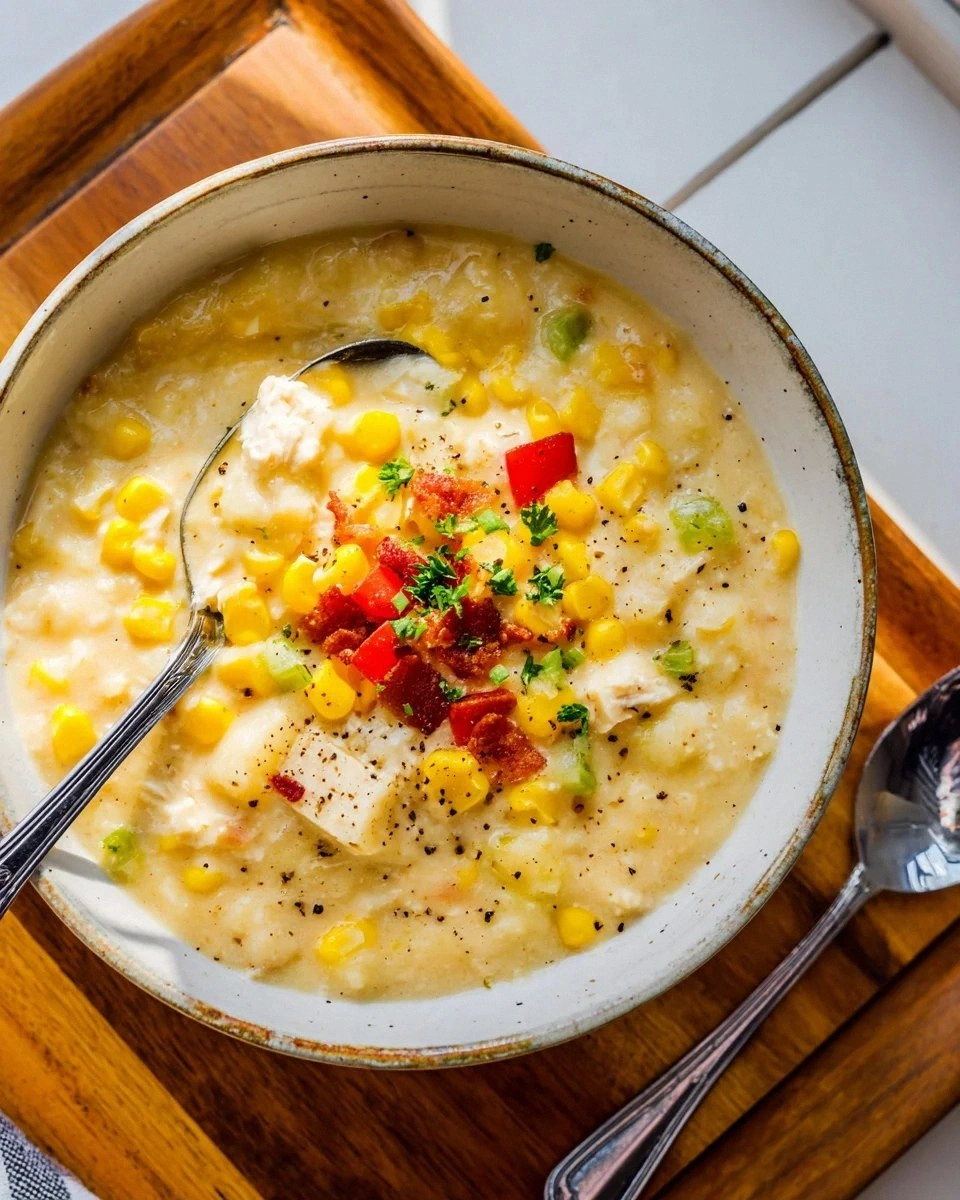
Picture this: it's a Tuesday night, the rain is drumming against your kitchen window like it's auditioning for a drumline, and you're standing in front of your pantry with a rumbling stomach and zero motivation. Been there? I practically live there. Last week I was in that exact scenario, staring down a half-eaten rotisserie chicken, a bag of frozen corn, and a slow cooker that still had last month's chili remnants clinging to the sides like barnacles. My roommate dared me to make something "actually edible" for once, and let me tell you, the gauntlet had been thrown. What happened next was either culinary genius or pure desperation, but the result was this Slow Cooker Chicken Corn Chowder that made me eat my words (and three bowls) while my roommate stood there spoon-frozen, eyes wide like I'd just performed actual kitchen sorcery.
I've made approximately forty-seven different chowder recipes in my life, from fancy restaurant knockoffs to whatever my grandmother scribbled on a napkin in 1997, and none of them hold a candle to this one. Most recipes taste like someone waved a corn-scented air freshener over thin, floury milk and called it a day. This version? It's the culinary equivalent of wrapping yourself in a cashmere blanket that's been warming by the fire while someone hands you a golden ladle of pure comfort. The broth is silky and rich without being heavy, the corn pops with sweetness against smoky bacon, and the chicken practically dissolves into savory threads that hug every vegetable like long-lost friends reuniting at a high-school reunion.
Here's the kicker: I used to think slow cooker chowder was a sad, watery compromise — something you settle for when you don't have time to babysit a pot on the stove. I was so wrong I could practically hear my slow cooker laughing at me from the cabinet. The gentle, steady heat does something magical here, coaxing out every last bit of flavor from humble ingredients while you're off doing literally anything else. Plus, there's a secret step involving a handful of corn and a blender that transforms the entire texture from "meh" to "are you serious right now?" Trust me, once you try this method, every other chowder will taste like someone forgot to finish cooking it.
Before we dive in, let me confess something: I ate half the batch straight from the slow cooker insert while standing over my sink, pretending to "taste for seasoning." My plan was to save the rest for lunches throughout the week, but that plan died a delicious death around midnight when I found myself in the kitchen again, spoon in hand, justifying that "it reheats better in smaller portions." If you've ever struggled with soup that's either too thin, too bland, or tastes like someone dumped a can of creamed corn over shredded paper, you're not alone — and I've got the fix. Let me walk you through every single step — by the end, you'll wonder how you ever made it any other way.
What Makes This Version Stand Out
Velvet Revolution: The broth isn't just cream and hope — we build layers by pureeing a cup of corn with a splash of stock, creating a natural thickener that coats every spoonful like liquid gold. This technique eliminates the need for flour pastes or cornstarch slurries that always end up tasting like kindergarten paste.
Smoke Without the Fire: A single slice of bacon renders just enough fat to sauté our vegetables, infusing the entire chowder with smoky depth without turning it into a bacon festival. It's the supporting actor that steals every scene without overshadowing the star ingredients.
Time-Travel Chicken: Using pre-cooked rotisserie chicken isn't cheating — it's genius. The slow cooker warms it through while the meat absorbs all the flavors, giving you that "cooked all day" taste without actually cooking all day. Plus, you get to pick the best parts and leave the weird dry bits for someone else.
Fresh vs. Frozen Freedom: This recipe works with fresh summer corn or frozen winter staples, making it a year-round obsession rather than a seasonal fling. The technique adjusts slightly for each, ensuring peak sweetness whether you're using sunshine-fresh kernels or freezer staples.
Texture Tango: We keep half the corn whole for pops of sweetness while pureeing the rest into the broth, creating a dance between creamy and chunky that keeps every bite interesting. It's like having two soups in one bowl, and your spoon never gets bored.
Make-Ahead Magic: This chowder actually improves overnight as the flavors mingle and marry, making it the perfect Sunday prep for week's worth of lunches that'll make your coworkers jealous. Just thin it with a splash of milk when reheating, and it's better than day one.
One-Pot Wonder: Everything happens in the slow cooker insert — even the initial sauté — meaning fewer dishes than your average bowl of cereal. We're talking minimal cleanup maximum payoff, which is my love language in the kitchen.
Alright, let's break down exactly what goes into this masterpiece...
Inside the Ingredient List
The Flavor Base
Let's start with the bacon because honestly, we should always start with bacon. One thick slice, about 1/4 inch, cut into tiny batons that'll render down into smoky, salty nuggets of gold. This isn't about making a bacon chowder — we're using it like a spice, a whisper of smoke that threads through every spoonful without announcing itself. If you're vegetarian, swap in 2 tablespoons of butter plus 1/2 teaspoon of smoked paprika, but know that you're missing out on the way bacon fat mingles with corn to create something approaching alchemy.
The holy trinity of onion, celery, and carrot gets a chowder makeover here. We want them diced small, about 1/4 inch, so they melt into the background rather than staging a vegetable protest in every bite. One medium onion, two celery ribs, and one carrot — nothing fancy, but together they create the savory backbone that makes this taste like it simmered for hours instead of minutes. Pro tip: dice them while the bacon renders so they hit the hot fat immediately, sizzling and caramelizing like tiny vegetable confetti.
The Texture Crew
Now for the corn — the real star of this show. You'll need 4 cups total, which sounds like a lot until you remember we're creating two distinct textures. If it's summer and you can get fresh corn, run don't walk to the farm stand. The sugars in fresh corn start converting to starch the moment it's picked, so buy it the day you plan to cook for maximum sweetness. Winter? Frozen corn is your friend, but avoid the super-sweet varieties — we want corn that tastes like corn, not candy.
The potatoes matter more than you'd think. Skip russets — they'll dissolve into mush faster than your resolve on a diet. Go for Yukon Gold or red potatoes, about 1 pound, diced into 1/2-inch cubes. These waxy varieties hold their shape during the long, slow cook while still releasing enough starch to help thicken the broth naturally. Leave the skins on for rustic charm and extra nutrients, or peel if you're feeding picky eaters who think potato skins are a personal attack.
The Unexpected Star
Here's where things get interesting: a single chipotle pepper in adobo sauce, minced into oblivion. Just one, but it adds this haunting smoky heat that makes people say "what is that amazing flavor?" without being able to pinpoint it. If you're spice-averse, use 1/2 teaspoon of the adobo sauce instead — you'll get the smokiness without the kick. Vegetarian friends, a pinch of smoked salt plus 1/4 teaspoon of chipotle powder works beautifully.
Fresh thyme is non-negotiable for me, but I get it if your herb garden is currently a pot of dead basil on the windowsill. Use 1 teaspoon of fresh leaves or 1/2 teaspoon dried, but please, for the love of all that's creamy and delicious, don't use that dusty jar that's been in your spice rack since 2019. Thyme should taste green and slightly lemony, not like forgotten pantry confetti.
The Final Flourish
Heavy cream gets all the glory in chowder recipes, but here's my confession: I use half-and-half. Heavy cream can make the whole thing taste like you're drinking butter, while half-and-half gives you richness without the food coma. Plus, it reheats better — no weird separation or grainy texture when you warm up leftovers. You'll need 1 cup, added in the last 30 minutes so it doesn't curdle during the long cook.
The chicken is where most recipes go wrong, turning into stringy, overcooked sadness. Enter: rotisserie chicken, the grocery store hero. Shred 2 cups of meat, discarding the skin (or save it for snacking, I won't tell). Add it in the last hour so it warms through without becoming that weird spongy texture that makes people swear off chicken soup forever. If you're starting with raw chicken, poach it first, then shred — but honestly, the rotisserie route is both faster and better.
Everything's prepped? Good. Let's get into the real action...

The Method — Step by Step
- First, render that bacon like your chowder's life depends on it — because honestly, it does. Cut your bacon slice into tiny 1/4-inch batons and scatter them in your slow cooker insert. If you have a sauté setting, crank it to high and let the bacon dance for 5-6 minutes until the fat melts and the edges turn golden. No sauté setting? Microwave the bacon on a paper towel for 90 seconds, then transfer it and all that glorious fat to your slow cooker. The sizzle when the cold insert hits hot fat? That's the sound of flavor being born. Stir occasionally so nothing burns, and resist the urge to eat all the bacon bits — you'll want them for garnish later.
- While the bacon works its magic, dice your vegetables with the precision of someone who's watched too many cooking shows. Onion, celery, and carrot should be 1/4-inch cubes — small enough to cook through but not so tiny they disappear into the broth. When the bacon's ready, scoop out the crispy bits with a slotted spoon and let them drain on a paper towel. These crunchy nuggets are your finishing touch, so hide them from family members who'll "just try one" until they're gone. Into the hot bacon fat goes your vegetable trio, plus 1/2 teaspoon of salt to help them release their moisture and start building flavor from the very beginning.
- Here's where patience pays off: let those vegetables cook for 8-10 minutes, stirring every couple minutes, until the onion turns translucent and the celery starts looking relaxed. This isn't a race — properly softened vegetables create the flavor base that separates good chowder from "why does this taste like hot vegetable water?" The carrot will still have some bite, and that's perfect. If things start looking dry, splash in a tablespoon of water to keep everything moving. Your kitchen should smell like a cozy diner at this point, all savory and inviting.
- Time for the aromatics that'll make people ask what smells so amazing. Add your minced chipotle pepper and thyme, stirring for 30 seconds until the herbs turn bright green and the chipotle starts to bloom. This brief cooking removes the raw edge while preserving that fresh flavor. If you're using dried thyme, give it a full minute — dried herbs need more time to wake up and join the party. The mixture should smell smoky and herbaceous, like a campfire in a herb garden (which, now that I think about it, sounds like a terrible idea but smells incredible).
- Now we build the chowder body with a technique that'll change your soup game forever. Take 1 cup of your corn and 1/2 cup of chicken stock, toss them in a blender, and blitz until completely smooth. This corn puree is your natural thickener, creating a velvety base without any floury taste or cornstarch globs. Pour this liquid gold over your vegetables, then add the remaining corn, potatoes, and enough stock to just cover everything — about 3 cups total. Give it a gentle stir, being careful not to break up those precious potato cubes.
- Here's the beautiful part: set your slow cooker to low for 6-7 hours or high for 3-4 hours, then walk away. Literally, leave the kitchen and go live your life. The gentle heat will coax every bit of flavor from the vegetables while the potatoes cook to tender perfection. Resist the urge to peek — every time you lift the lid, you add 15-20 minutes to the cooking time. When you return, your house will smell like you've been slaving over a hot stove all day, but you've actually been binge-watching your favorite show. Kitchen magic at its finest.
- With 30 minutes left on the timer, it's time for the final additions that'll take this from good to "are you serious right now?" Stir in your half-and-half and shredded chicken, then season with salt and pepper. Start with 1 teaspoon of salt and 1/2 teaspoon of pepper, but taste and adjust — potatoes love salt, and under-seasoned chowder is a crime against comfort food. The chicken should warm through but not cook further, maintaining that tender, almost fluffy texture that makes people wonder how you got it so perfect.
- The final flourish happens right before serving, and it's what separates home cooks from kitchen heroes. Ladle the chowder into warm bowls (cold bowls steal heat faster than your roommate steals fries), then top with those reserved bacon bits, a sprinkle of fresh thyme, and a twist of black pepper. If you're feeling fancy, add a drizzle of good olive oil or a few drops of chipotle hot sauce. Serve with crusty bread for dipping, or better yet, serve in bread bowls because you're not just making dinner — you're creating an experience.
That's it — you did it. But hold on, I've got a few more tricks that'll take this to another level...
Insider Tricks for Flawless Results
The Temperature Rule Nobody Follows
Here's the thing about dairy-based soups: they're drama queens when it comes to temperature changes. If you've ever ended up with grainy, separated chowder that looks like it's having an identity crisis, temperature is usually the culprit. Always warm your half-and-half before adding it to the hot soup — 30 seconds in the microwave or a quick simmer in a small pan does the trick. This prevents the dairy proteins from shocking and clumping together like awkward teenagers at a school dance. The same rule applies when reheating: gentle heat, constant stirring, and never let it boil unless you enjoy eating soup that looks like cottage cheese.
But here's the real secret: if you're making this for a crowd and want to keep it warm for hours, transfer it to a thermal carafe or keep it on the warm setting with the lid slightly ajar. The gentle heat maintains the perfect serving temperature without continuing to cook the dairy. I've kept chowder perfect for three hours this way at potlucks, and people still ask how I got it so creamy after sitting out. The answer is science, but I usually just smile mysteriously and blame magic.
Why Your Nose Knows Best
Forget timers — your nose is the most sophisticated kitchen tool you own. When the vegetables are properly sautéed, they'll smell sweet and savory, not sharp and raw. The chowder's done when your kitchen smells like a cozy New England inn, all corn sweetness and creamy comfort. If you catch a whiff of something slightly nutty and sweet, that's the corn's natural sugars caramelizing — the signal that you're minutes away from perfection. My grandmother could tell when her chowder was ready by smell alone, and honestly, I've never had better timing than when I follow her lead and trust my senses over the clock.
This is especially crucial when using different slow cookers — they all have personalities. My old crockpot runs hot and finishes 30 minutes early, while my friend's runs so cool we had to add an extra hour. But both fill the house with the same incredible aroma when they're done. If your house smells like you want to dive face-first into the slow cooker, you're there. If it still smells faintly of raw onion, give it more time. Your nose knows.
The 5-Minute Rest That Changes Everything
After stirring in the cream and chicken, turn off the slow cooker and let everything rest for 5 minutes before serving. This isn't just chef nonsense — it allows the temperature to equalize, the flavors to meld, and the steam to settle so you can actually taste what you've created instead of burning off all your taste buds. During this rest, the potatoes finish absorbing just enough liquid to reach that perfect tender-but-not-mushy texture, and the whole chowder thickens slightly to that ideal coat-the-spoon consistency. Plus, it gives you time to warm your bowls, set the table, or just stand there inhaling the incredible aroma like a cartoon character floating toward pie.
I learned this trick from a chef friend who swore by the "five-minute rule" for all creamy soups. Test it yourself: ladle some immediately after adding cream, then taste again after the rest. The difference is remarkable — the rested version tastes more cohesive, more rounded, like all the ingredients finally decided to work together instead of competing for attention. It's the difference between a good soup and a great one, and it costs you nothing but a few minutes of patience. Trust me, your taste buds will thank you.
Creative Twists and Variations
This recipe is a playground. Here are some of my favorite ways to switch things up:
Seafood Celebration
Swap the chicken for 1 pound of peeled shrimp and 1/2 pound of bay scallops, added in the last 15 minutes of cooking. The seafood releases its own briny liquor into the chowder, creating something that tastes like you caught dinner yourself. Add a bay leaf and swap the thyme for fresh dill to make it taste like summer in Maine. The chipotle stays — it adds a subtle warmth that makes the seafood sing without overwhelming its delicate flavor. Serve with oyster crackers and watch people lose their minds.
Vegetarian Victory
Skip the bacon and chicken, using 2 tablespoons of butter plus 1 teaspoon of smoked paprika for that essential depth. Replace chicken stock with vegetable stock, and add 1 can of white beans for protein and creaminess. The beans break down slightly and thicken the chowder while adding a nutty sweetness that plays beautifully with the corn. Top with roasted pumpkin seeds for crunch and a drizzle of chili oil for the wow factor. Even devoted carnivores ask for seconds.
Southwest Firecracker
Ramp up the chipotle to 2 peppers and add 1 teaspoon of ground cumin along with 1 red bell pepper diced small. Swap the thyme for cilantro, and finish with a squeeze of lime juice and a handful of crushed tortilla chips. The result tastes like elote met chowder at a food truck festival — familiar but totally new. Add pepper jack cheese on top if you're feeling rebellious, and serve with cornbread for a full Southwestern experience.
Loaded Baked Potato
Use russet potatoes instead of Yukon Gold, and add 1 cup of shredded sharp cheddar with the cream. Top with sour cream, chopped green onions, and extra bacon bits (because more bacon is rarely wrong). The russets break down more, creating a chowder that's basically vichyssoise's rowdy cousin. It's outrageously rich and perfect for those "I need comfort food now" days. Just plan for a nap afterward.
Autumn Harvest
Add 1 cup of diced butternut squash and swap the thyme for fresh sage. The squash melts into the broth, adding autumn sweetness and extra body. A sprinkle of nutmeg at the end makes it taste like fall in a bowl. This version is particularly stunning served in small pumpkins for a dinner party presentation that looks way harder than it is. The chipotle adds warmth without heat, making it perfect for those crisp October evenings.
Breakfast for Dinner
Stir in 2 cups of frozen hash browns instead of diced potatoes, and add 3 scrambled eggs right at the end, stirring gently to create ribbons of egg throughout. Top with everything bagel seasoning and serve with toast points. It's like corn chowder and breakfast hash had a beautiful baby. Weird? Maybe. Delicious? Absolutely. My kids request this version weekly, and honestly, I'm not mad about it.
Storing and Bringing It Back to Life
Fridge Storage
Cool the chowder completely before transferring to airtight containers — I use wide-mouth mason jars because they stack neatly and the glass doesn't absorb odors. It'll keep for 4-5 days in the fridge, though honestly, mine never lasts that long. The flavors actually improve after the first day as everything melds together, making this perfect for meal prep. Store the bacon bits separately in a zip-top bag so they stay crispy, because soggy bacon is a tragedy we can avoid. When reheating, add a splash of milk or stock to thin it out — the potatoes continue absorbing liquid as it sits.
Freezer Friendly
Here's where we get strategic: freeze the chowder base (everything except the cream and chicken) for up to 3 months. When ready to serve, thaw overnight in the fridge, then reheat gently and stir in the cream and chicken during the last 10 minutes. This prevents the dairy from separating and the chicken from getting that weird freezer texture. Freeze in portion-sized containers so you can have single-serve comfort food whenever the craving hits. I've been known to freeze it in muffin tins for perfect 1-cup portions that thaw quickly.
Best Reheating Method
Forget the microwave unless you're desperate — it heats unevenly and can turn your beautiful chowder into a grainy mess. Instead, reheat gently in a saucepan over medium-low heat, stirring frequently and adding liquid as needed. If you're in a hurry, microwave at 50% power in 30-second bursts, stirring between each burst. The key is patience and constant stirring to maintain that silky texture. A splash of warm milk or stock brings everything back to life, and a fresh sprinkle of bacon bits on top makes it taste just-made.