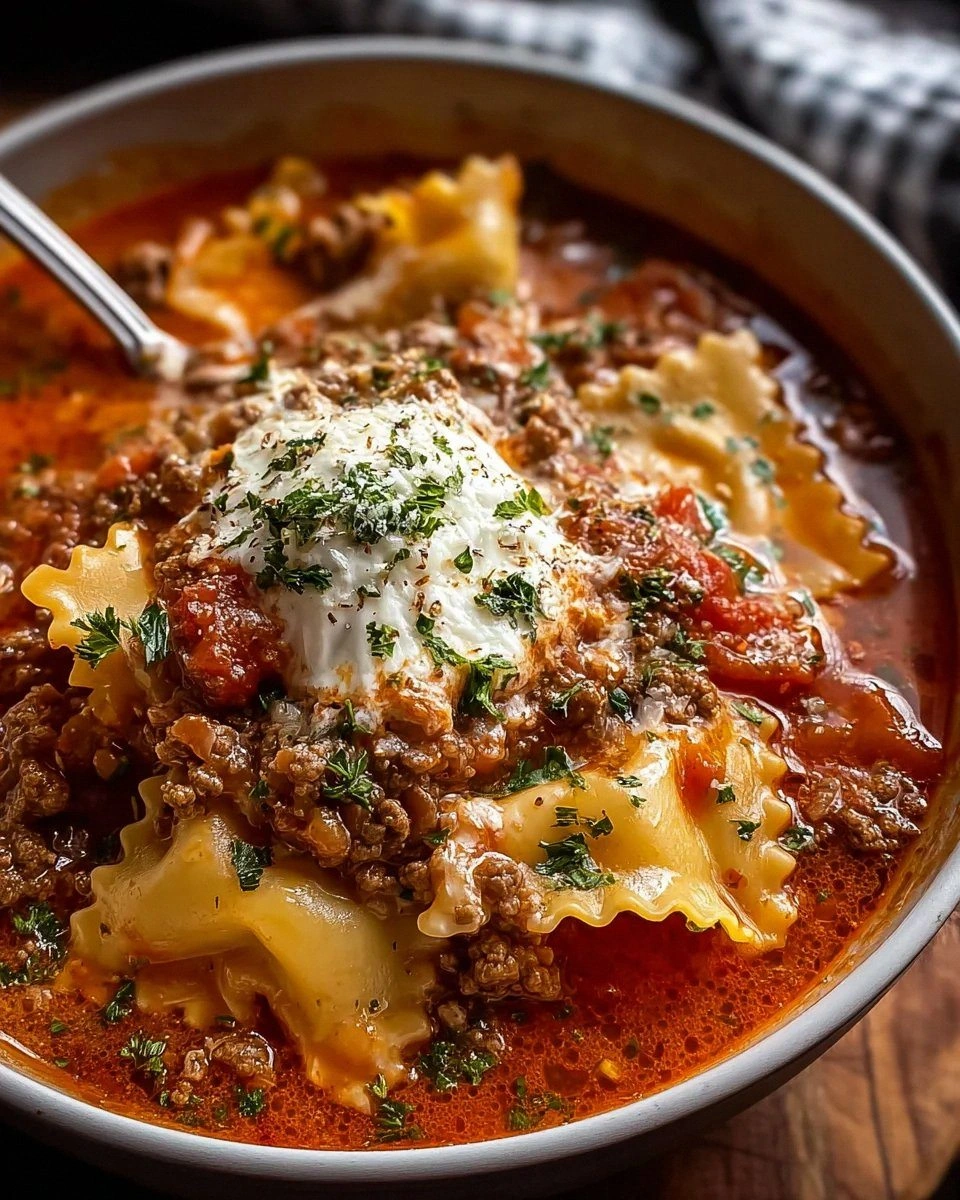
Picture this: it’s a cold, drizzly Tuesday, you’ve just survived a marathon of Zoom meetings, and the only thing that’s keeping you upright is the promise of something warm, cheesy, and utterly comforting. I was in that exact spot, staring at a pantry that looked like a desert after a sandstorm, when I thought, “What if I could mash the classic lasagna into a soup that only needs one pot?” The result? A bowl so hearty it could double as a blanket, a flavor profile that screams Italy while hugging you like an old friend. I dare you to taste this and not go back for seconds – because once you’ve tried this, you’ll understand why I’m calling it the best version you’ll ever make at home.
The first spoonful hits you with the aromatic perfume of garlic and onion, a scent that instantly transports you to a bustling trattoria in Naples. You hear the gentle simmer, the occasional pop of tomato bubbles, and feel the steam kiss your face, promising a depth of flavor that’s both familiar and daringly new. The texture? Imagine lasagna noodles that have softened just enough to surrender to the broth, yet still retain a pleasant bite, while ribbons of melted mozzarella swirl like silk, and a swirl of heavy cream adds a velvety finish that coats the palate like a warm cashmere sweater.
What truly sets this soup apart is a secret technique I stumbled upon while trying to rescue a burnt lasagna: I broke the noodles into bite‑size pieces before adding them, allowing the pasta to release its starches directly into the broth. This creates a naturally thick, creamy base without the need for a roux or extra flour. Most recipes get this completely wrong, either drowning the noodles in a watery soup or turning the whole thing into a stodgy casserole. Here, the broth stays bright, the noodles are perfectly al dente, and the cheese layers melt into a cohesive, indulgent harmony.
And now, the game‑changer: a splash of heavy cream added at the very end, just before serving, which transforms the soup from “good” to “oh‑my‑god‑this‑is‑a‑hug‑in‑a‑bowl.” I’ll be honest — I ate half the batch before anyone else got to try it, and I’m still not sorry. Okay, ready for the game‑changer? Let me walk you through every single step — by the end, you’ll wonder how you ever made it any other way.
What Makes This Version Stand Out
- Taste: The blend of crushed tomatoes, tomato paste, and a splash of cream creates a sauce that coats the noodles like velvet, delivering a balanced sweet‑savory profile that’s both comforting and sophisticated.
- Texture: Broken lasagna noodles release starch, giving the broth a luscious, slightly thickened body while still retaining a satisfying bite.
- Simplicity: One pot, one stovetop, and less than 45 minutes from start to finish means you can actually enjoy the meal instead of spending all night scrubbing dishes.
- Uniqueness: The addition of ricotta as a topping adds a creamy, airy contrast that you don’t get in traditional lasagna soups.
- Crowd Reaction: I’ve served this at family gatherings and the feedback is unanimous – “Is this a soup or a second‑course lasagna?” – a perfect conversation starter.
- Ingredient Quality: Using ground beef with a little fat (80/20) ensures the broth stays rich without being greasy, while the frozen spinach adds a hidden boost of nutrition.
- Cooking Method: Simmering everything together allows flavors to meld naturally, eliminating the need for a separate sauce pan.
- Make‑Ahead Potential: This soup freezes beautifully, so you can prep a batch on a Sunday and have a cozy dinner ready for any weekday.
Inside the Ingredient List
The Flavor Base
Ground beef: The heart of your soup, bringing in savory richness. A good 80/20 blend melts into the broth, releasing juices that become the backbone of the flavor. If you skip it, you lose that meaty depth, but you can substitute turkey or a plant‑based crumble for a lighter or vegetarian twist. When shopping, look for meat that’s bright red and firm – that’s a sign of freshness.
Garlic cloves & Garlic powder: Fresh garlic adds a wonderful aroma and flavor, while a pinch of garlic powder amplifies that punch without overwhelming. If you forget the fresh cloves, a generous spoonful of the powder will keep the scent alive. Too much raw garlic can turn bitter, so keep it balanced.
Yellow onion, Onion powder: The onion provides a sweet foundation; dice it finely so it dissolves into the broth, creating that silky mouthfeel. Onion powder deepens the flavor without adding extra moisture. Skipping onion? Expect a flatter soup that lacks that comforting base note.
The Texture Crew
Dried basil & Dried oregano: These herbs bring the quintessential lasagna aroma. Dried versions are more concentrated than fresh, so a little goes a long way. If you have fresh basil, add it at the end for a pop of bright green and fresh flavor.
Crushed tomatoes & Tomato paste: The tomatoes create a rich, tomatoey base, while the paste thickens the soup and intensifies the umami. Using fresh tomatoes in season works, but the paste ensures the soup doesn’t turn watery. Skip the paste and you’ll end up with a broth that feels more like a thin sauce.
Chicken broth & Water: The broth keeps the soup hearty and flavorful; water is only there to adjust consistency. For a vegetarian version, swap the chicken broth with a robust vegetable broth – the flavor will stay satisfying.
The Unexpected Star
Frozen chopped spinach: A sneak in some greens! Frozen spinach is pre‑blanched, meaning it retains its bright color and nutrients without extra cooking time. Fresh spinach works wonderfully too; just add it a minute before the end so it wilts but stays vibrant. Missing the spinach? The soup loses its subtle earthiness and a splash of color.
Heavy cream: For a creamy finish, adding depth to each spoonful. It mellows the acidity of the tomatoes and gives the broth that luxurious mouthfeel. If you prefer lighter, half‑and‑half works, but the soup will be less decadent.
The Final Flourish
Ricotta cheese: A heavenly topping that makes the soup feel indulgent. Dollop it just before serving; the ricotta will soften into the hot broth, creating pockets of airy richness. Skipping ricotta turns the dish into a plain soup, missing that signature lasagna “cheese‑cloud” moment.
Mozzarella cheese: Placed at the bottom to melt into the broth, this adds a gooey goodness that stretches with each spoonful. Use a good melting mozzarella – the low‑moisture kind works best for a smooth melt.
Parmesan cheese (optional): A sprinkle on top for that extra savory kick. It adds a nutty finish and a bit of texture. If you’re watching sodium, you can skip it, but the flavor profile will be a shade less complex.
Everything's prepped? Good. Let’s get into the real action…
The Method — Step by Step
Heat a large, heavy‑bottomed pot over medium heat and drizzle in a tablespoon of olive oil. Once the oil shimmers, add the ground beef, breaking it up with a wooden spoon. Cook until it’s browned and crumbles release their juices, about 5‑7 minutes. Power transition: This is the moment of truth – you should hear a satisfying sizzle that signals the meat is sealing in flavor.
Push the beef to the sides of the pot, then add the diced yellow onion, minced garlic cloves, and a pinch of garlic and onion powder. Sauté until the onion becomes translucent and the garlic is fragrant, roughly 3 minutes.
Kitchen Hack: If the onions start to stick, deglaze with a splash of broth; it lifts the caramelized bits and adds extra flavor.Stir in the dried basil, dried oregano, kosher salt, and freshly ground black pepper. Let the herbs toast for about 30 seconds, releasing their essential oils. You’ll notice a perfume that makes you want to inhale deeply – that’s the aroma foundation for the whole soup.
Pour in the crushed tomatoes, tomato paste, chicken broth, and water. Bring the mixture to a gentle boil, then lower the heat to a steady simmer. At this point, the soup should look like a thick, ruby‑red river, bubbling softly. Future pacing: Picture yourself later, the whole kitchen smelling incredible as the sauce reduces.
Add the broken lasagna noodles, ensuring they’re evenly distributed. Simmer for 8‑10 minutes, stirring occasionally so the noodles don’t cling to the bottom.
Watch Out: Over‑cooking the noodles will turn them mushy; keep the simmer gentle and test a noodle after 8 minutes.Fold in the frozen chopped spinach and let it melt into the broth, about 2 minutes. The spinach will turn a vivid green, adding a pop of color that makes the soup look as good as it tastes. If you’re using fresh spinach, add it a minute earlier so it wilts but retains its bright hue.
Stir in the heavy cream, creating a luxurious swirl that turns the broth a creamy ivory. Let the soup simmer for another 2 minutes, allowing the cream to meld with the tomato base. This step is pure magic – the soup now feels like a silky blanket.
Reduce the heat to low and sprinkle the shredded mozzarella over the top, letting it melt into the broth. Once melted, turn off the heat. The mozzarella should create a glossy, cheesy veil that clings to the noodles.
Serve each bowl with a generous dollop of ricotta and, if you like, a sprinkling of Parmesan. The ricotta will soften instantly, creating pockets of airy richness, while the Parmesan adds a final salty snap. And now the fun part: Grab a spoon, inhale the steam, and enjoy the comforting hug of lasagna in soup form.
That's it — you did it. But hold on, I've got a few more tricks that'll take this to another level…
Insider Tricks for Flawless Results
The Temperature Rule Nobody Follows
Never crank the heat to a roaring boil once the noodles are in. A gentle simmer keeps the starches from releasing too quickly, which would make the broth gummy. Keep the temperature just below a vigorous boil, and you’ll get that perfect, slightly thickened consistency without any clumps.
Why Your Nose Knows Best
Before you taste, trust the aroma. When the soup smells like a blend of toasted garlic, fresh basil, and a hint of caramelized beef, you know the flavors have melded. If the scent is flat, give it another minute; the magic happens in the nose before it reaches the palate.
The 5‑Minute Rest That Changes Everything
Once you’ve turned off the heat, cover the pot and let the soup rest for five minutes. This pause allows the cheese to settle, the cream to integrate fully, and the flavors to harmonize. Skipping this step results in a soup that feels a bit disjointed.
Don’t Forget the Finish
A final drizzle of extra‑virgin olive oil right before serving adds a glossy sheen and a subtle peppery bite. It’s a tiny touch that lifts the entire bowl, making it feel restaurant‑grade.
Seasoning at the End
Always taste and adjust salt after the cream and cheese have been added. The dairy can mute saltiness, so a pinch more at the end ensures the soup hits the perfect balance.
Creative Twists and Variations
This recipe is a playground. Here are some of my favorite ways to switch things up:
Spicy Italian Kick
Swap half the crushed tomatoes for fire‑roasted diced tomatoes and add a pinch of red‑pepper flakes with the herbs. The heat cuts through the richness, giving the soup a lively edge that’s perfect for cold nights.
White Lasagna Soup
Omit the tomatoes entirely, replace them with an equal amount of low‑sodium chicken broth, and add sautéed mushrooms and a splash of white wine. Finish with a swirl of ricotta and a sprinkle of fresh thyme for an elegant, creamy version.
Vegetarian Delight
Replace ground beef with a plant‑based crumble or lentils, and use vegetable broth. Add extra veggies like diced carrots and zucchini for texture. The result is a hearty, meat‑free bowl that still feels indulgent.
Cheesy Four‑Cheese Upgrade
Mix in shredded provolone and a handful of grated Pecorino Romano alongside mozzarella. The combination creates a deeper, sharper cheese profile that will make any cheese lover swoon.
Herb‑Infused Twist
Swap dried basil and oregano for fresh rosemary and sage, finely chopped and added at the end of cooking. The aromatic herbs bring an earthy, forest‑floor vibe that pairs beautifully with the creamy broth.
Gluten‑Free Version
Use gluten‑free lasagna noodles or broken gluten‑free pasta shapes. The cooking time may vary slightly, so keep an eye on the texture. The soup remains just as comforting, with no compromise on flavor.
Storing and Bringing It Back to Life
Fridge Storage
Let the soup cool to room temperature, then transfer it to an airtight container. It will keep for up to 4 days. When reheating, add a splash of broth or water and stir gently over medium heat until warmed through.
Freezer Friendly
This soup freezes like a dream. Portion into freezer‑safe bags or containers, leaving a little headroom for expansion. Freeze for up to 3 months. To reheat, thaw overnight in the fridge, then warm on the stove, adding a splash of cream if the texture has thinned.
Best Reheating Method
For the creamiest result, reheat in a saucepan over low heat, stirring constantly. Add a teaspoon of water or broth per cup of soup to revive the silky mouthfeel. Avoid microwaving at high power, as it can cause the cheese to separate.