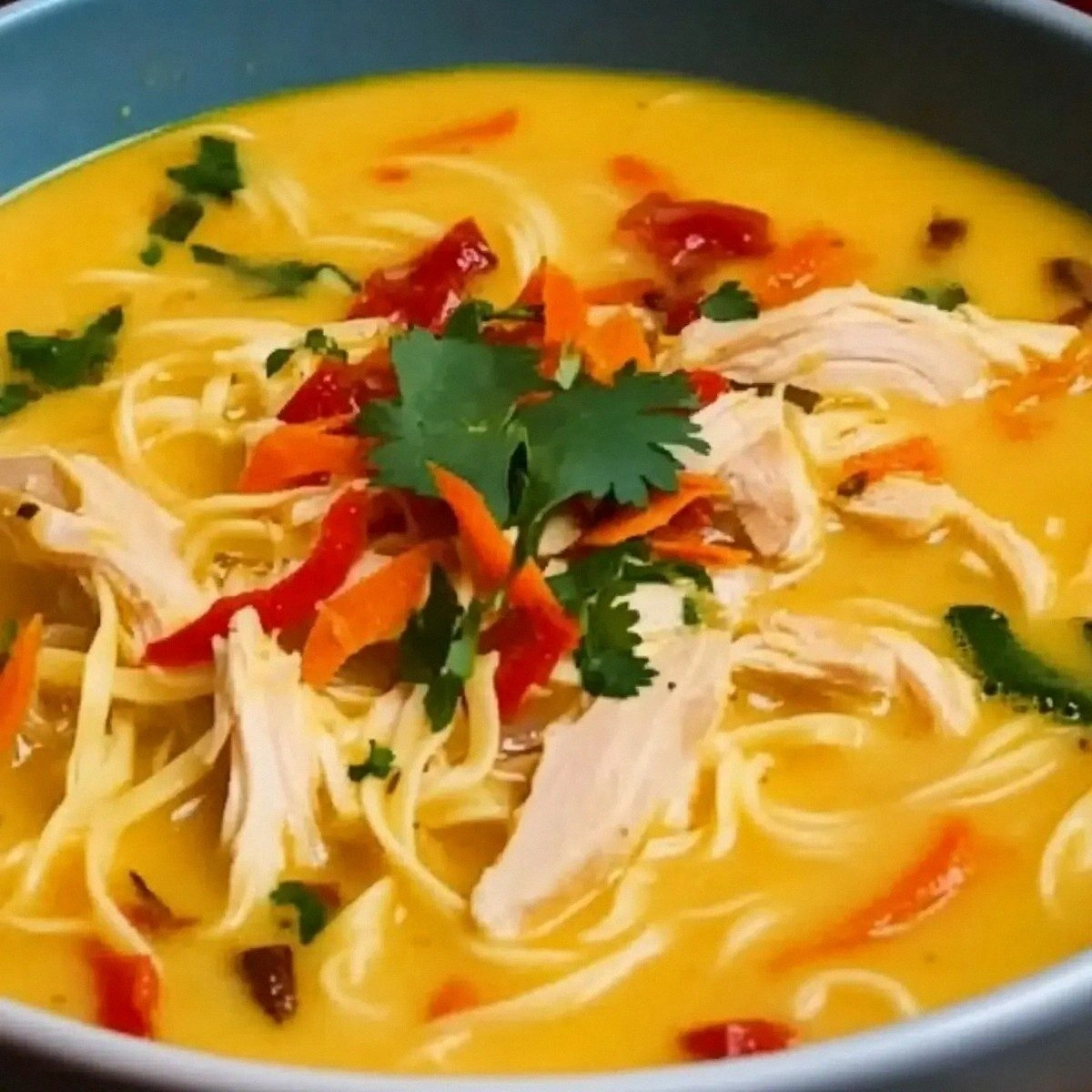
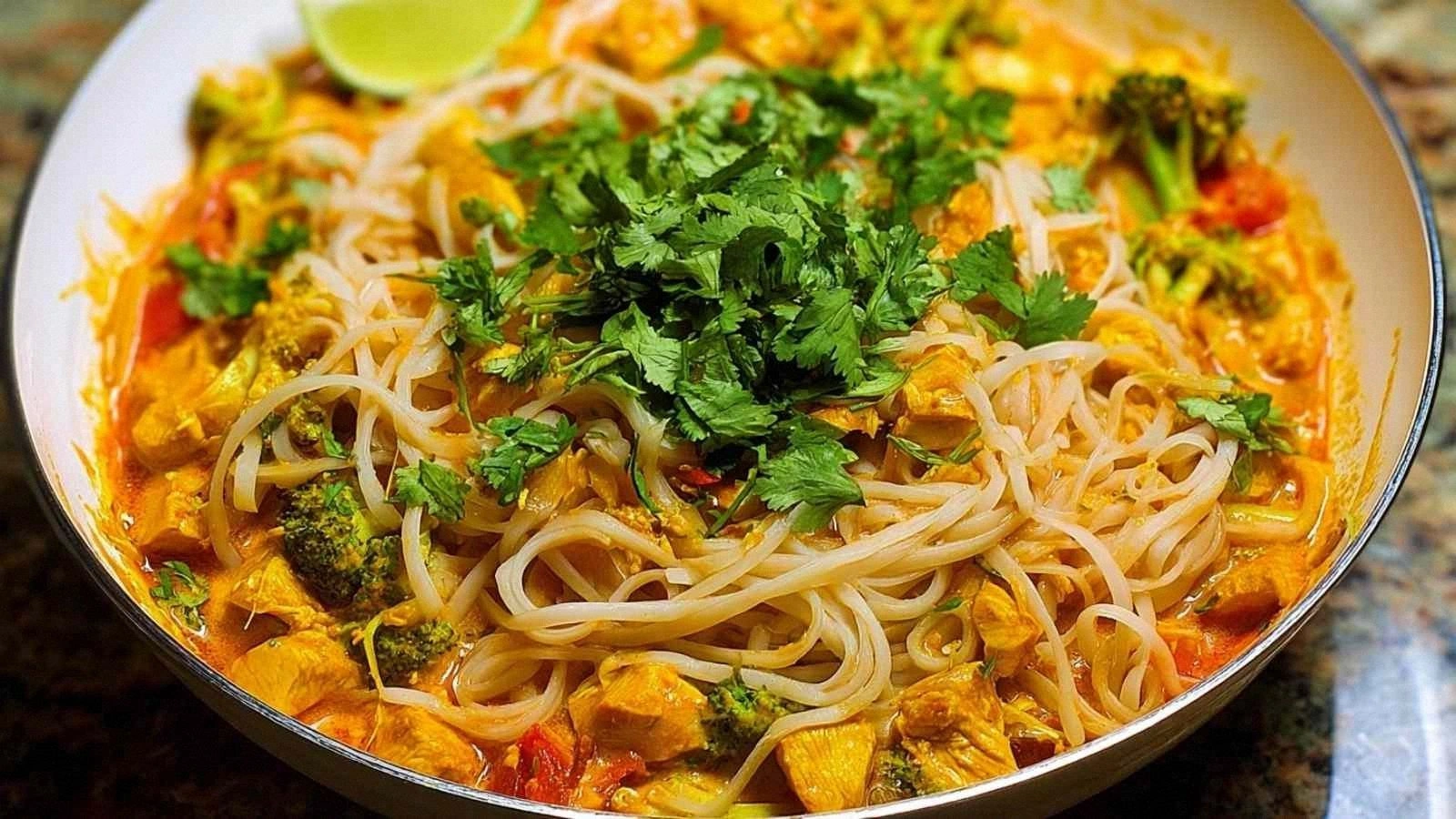
I still remember the night my kitchen turned into a battlefield: a half‑cooked chicken thigh, a splattered can of coconut milk, and a desperate search for the right flavor combo. I stared at the pot, the aroma of burnt garlic wafting through the air, and thought, “I’m going to make something that actually works.” That moment sparked a culinary experiment that has become my go‑to comfort dish. This Coconut Curry Chicken Rice Noo is not just another noodle recipe; it’s a symphony of textures and tastes that will have you reaching for seconds before you even finish the first bite.
Picture this: the moment the coconut milk hits the skillet, a fragrant steam rises, carrying hints of toasted curry paste and fresh garlic. Your senses are instantly awakened— the sizzling sound, the sweet, slightly nutty scent, the visual of silky sauce swirling around tender chicken pieces. As you stir, the sauce thickens, coating the noodles and veggies like a velvety blanket. The first spoonful is a burst of tropical pineapple, crisp broccoli, and a gentle kick of sriracha that dances on your palate. I dare you to taste this and not go back for seconds.
What sets this version apart is that it balances complexity with simplicity. I’ve stripped away the extra steps that most recipes add—no pre‑soaking, no separate sauce mix—yet the flavor depth remains intact. The chicken thighs stay juicy, the noodles stay al dente, and the sauce never tastes greasy. I’ve also added a dash of fresh cilantro right before serving to lift the dish with a bright, herbal note. This is hands down the best version you'll ever make at home, and it’s so easy that even a kitchen novice can pull it off.
I’ll be honest—when I first tried this, I ate half the batch before anyone else got to taste it. That’s the power of this dish. It’s so satisfying that you’ll want to keep the pot on the stove while you clean up the rest of the kitchen. Picture yourself pulling this out of the pan, the whole kitchen smelling incredible, and the table already set with bowls of steaming noodles. Stay with me here—this is worth it. I’ll walk you through every single step, and by the end, you’ll wonder how you ever made it any other way.
What Makes This Version Stand Out
- Flavor: The combination of coconut milk and red curry paste creates a rich, creamy base that’s both sweet and savory. The pineapple adds a refreshing sweetness that cuts through the heat of the sriracha, leaving a balanced finish.
- Texture: The chicken thighs remain succulent, the rice noodles stay firm, and the vegetables retain a pleasant crunch. The sauce coats everything like velvet, ensuring every bite is moist yet not soggy.
- Simplicity: No pre‑simmered sauces or complicated marinades. Just a quick sear, a simmer, and a final toss. The entire process takes less than an hour.
- Uniqueness: The unexpected use of pineapple and a hint of sriracha gives this dish a tropical twist that’s not found in standard curry noodle recipes.
- Crowd Reaction: Friends who’ve tried this rave about the “wow” factor. It’s a showstopper for dinner parties or family meals.
- Ingredient Quality: Using fresh chicken thighs, high‑quality coconut milk, and crisp vegetables elevates the dish beyond a generic takeout copy.
- Cooking Method: The sear technique locks in juices, while the gentle simmer melds flavors without overcooking the noodles.
- Make‑Ahead Potential: This dish keeps well in the fridge and reheats beautifully, making it ideal for meal prep.
Inside the Ingredient List
The Flavor Base
The red curry paste and coconut milk are the heart of this dish. They provide the creamy, aromatic foundation that carries the other ingredients. If you skip the curry paste, the sauce will be bland and the dish will feel incomplete. For a milder version, use a light red curry paste or reduce the amount slightly.
The Texture Crew
Rice noodles bring that silky, chewy texture that pairs beautifully with the sauce. The broccoli florets and shredded carrots add a satisfying crunch and a pop of color. If you’re allergic to soy, replace the soy sauce with tamari or coconut aminos for a gluten‑free option.
The Unexpected Star
Pineapple isn’t just a garnish; it’s a flavor agent. Its natural sweetness balances the heat from the sriracha and the richness of the coconut milk. If you prefer a less sweet profile, reduce the pineapple by half or substitute with diced mango for a different tropical note.
The Final Flourish
Fresh cilantro leaves add a bright, herbaceous finish that cuts through the richness. Salt and pepper are essential for seasoning, but be careful not to over‑salt; the soy sauce already brings saltiness. A pinch of pepper adds a subtle heat that complements the sriracha.
Everything’s prepped? Good. Let’s get into the real action.
The Method — Step by Step
- Heat the canola oil in a large skillet over medium‑high heat. Add the chicken thighs, skin side down, and sear until golden brown on one side, about 4 minutes. Flip and sear the other side for 3 minutes. The goal is a caramelized crust that locks in juices.
- Remove the chicken from the skillet and set aside. In the same pan, add minced garlic and sauté until fragrant, about 30 seconds. Be careful not to burn the garlic; it should turn golden, not brown.
- Stir in the red curry paste, allowing it to toast for 1 minute. The aroma will intensify, signaling that the paste has released its essential oils. This step is crucial for depth of flavor.
- Pour in the coconut milk, soy sauce, and sriracha. Bring to a gentle simmer, then reduce heat to low. The sauce should thicken slightly but remain pourable. This is the moment of truth—watch the colors deepen.
- Add the chicken back to the pan, nestling it into the sauce. Let it simmer for 8 minutes, ensuring the chicken is fully cooked and the flavors meld. The sauce should coat the chicken like a glossy glaze.
- While the chicken simmers, cook the rice noodles according to package instructions, then drain and rinse under cold water to stop the cooking process. This prevents them from becoming mushy when mixed later.
- Introduce the broccoli, carrots, and pineapple to the pan. Cook for 3–4 minutes until the vegetables are bright green and just tender. The pineapple should be slightly caramelized on the edges.
- Toss the cooked noodles into the skillet, stirring to coat them in the sauce. Let everything heat through for an additional 2 minutes, allowing the noodles to absorb the flavors.
- Finish with a handful of fresh cilantro leaves and a sprinkle of pepper. Serve hot, and enjoy the explosion of tropical sweetness, savory depth, and subtle heat.
That’s it—you did it. But hold on, I've got a few more tricks that'll take this to another level.
Insider Tricks for Flawless Results
The Temperature Rule Nobody Follows
Many cooks keep the heat too high during the final simmer, causing the sauce to evaporate and thicken too much. Keep the heat low and let the flavors marry gently. I’ve found that a low simmer preserves the silky texture of the coconut milk and prevents the noodles from sticking.
Why Your Nose Knows Best
The aroma of toasted curry paste is a reliable indicator of readiness. If it smells nutty and slightly sweet, the paste is properly toasted. If it smells raw or bitter, you need to let it cook a bit longer. Trust your nose; it’s your best seasoning guide.
The 5-Minute Rest That Changes Everything
After removing the dish from heat, let it rest for 5 minutes before serving. This allows the sauce to thicken slightly and the flavors to settle. A friend once skipped this step and ended up with a watery dish—don’t make the same mistake.
The Quick Cilantro Trick
Chop cilantro just before serving to keep its bright flavor. If you chop too early, the leaves wilt and lose their zing. A quick sprinkle right before plating adds a fresh, herbal note that elevates the dish.
The Secret to Perfect Noodles
Rinse the noodles under cold water after draining to stop the cooking process and remove excess starch. This prevents them from becoming gummy when mixed with the sauce. A friend once left the noodles in hot water, and the texture was off—never repeat that.
The Coconut Milk Consistency Check
If the coconut milk is too thick, thin it with a splash of water or chicken broth. If it’s too thin, let it simmer longer until it reaches your desired consistency. Adjusting the thickness ensures the sauce coats everything evenly.
Creative Twists and Variations
Tropical Swap
Replace pineapple with diced mango for a sweeter, more exotic taste. Mango’s firmness also adds a pleasant bite. This variation is perfect for a summer brunch.
Spicy Kick
Add a tablespoon of crushed red pepper flakes to the sauce for an extra fiery punch. Pair it with a splash of lime juice for a citrusy counterbalance. This version is great for those who love heat.
Vegetarian Version
Swap the chicken for firm tofu or tempeh. Marinate the protein in a little soy sauce and lime juice before browning. The tofu will soak up the curry flavors beautifully.
Gluten-Free Noodles
Use rice noodles or glass noodles as a gluten-free alternative. The cooking time remains the same, and the texture is just as delightful. This makes the dish accessible to a wider audience.
Low‑Calorie Take
Use light coconut milk and reduce the oil to 1 tablespoon. Increase the vegetable ratio to 3 cups of mixed veggies. This keeps the dish flavorful while cutting calories.
Breakfast Twist
Serve the curry over scrambled eggs and toasted coconut flakes for a hearty breakfast. The protein and tropical flavors kickstart the day. It’s a surprising but delicious way to enjoy curry in the morning.
Storing and Bringing It Back to Life
Fridge Storage
Store leftovers in an airtight container in the refrigerator for up to 3 days. Keep the noodles separate if you plan to reheat them later to avoid sogginess. This method preserves the texture and flavor.
Freezer Friendly
For longer storage, freeze the dish in a freezer‑safe container for up to 2 months. Thaw overnight in the refrigerator before reheating. The coconut milk may separate slightly; give it a quick stir before serving.
Best Reheating Method
Reheat on the stovetop over low heat, adding a splash of water or coconut milk to restore moisture. Stir frequently to prevent sticking. A tiny splash of water before reheating steams the dish back to perfection.