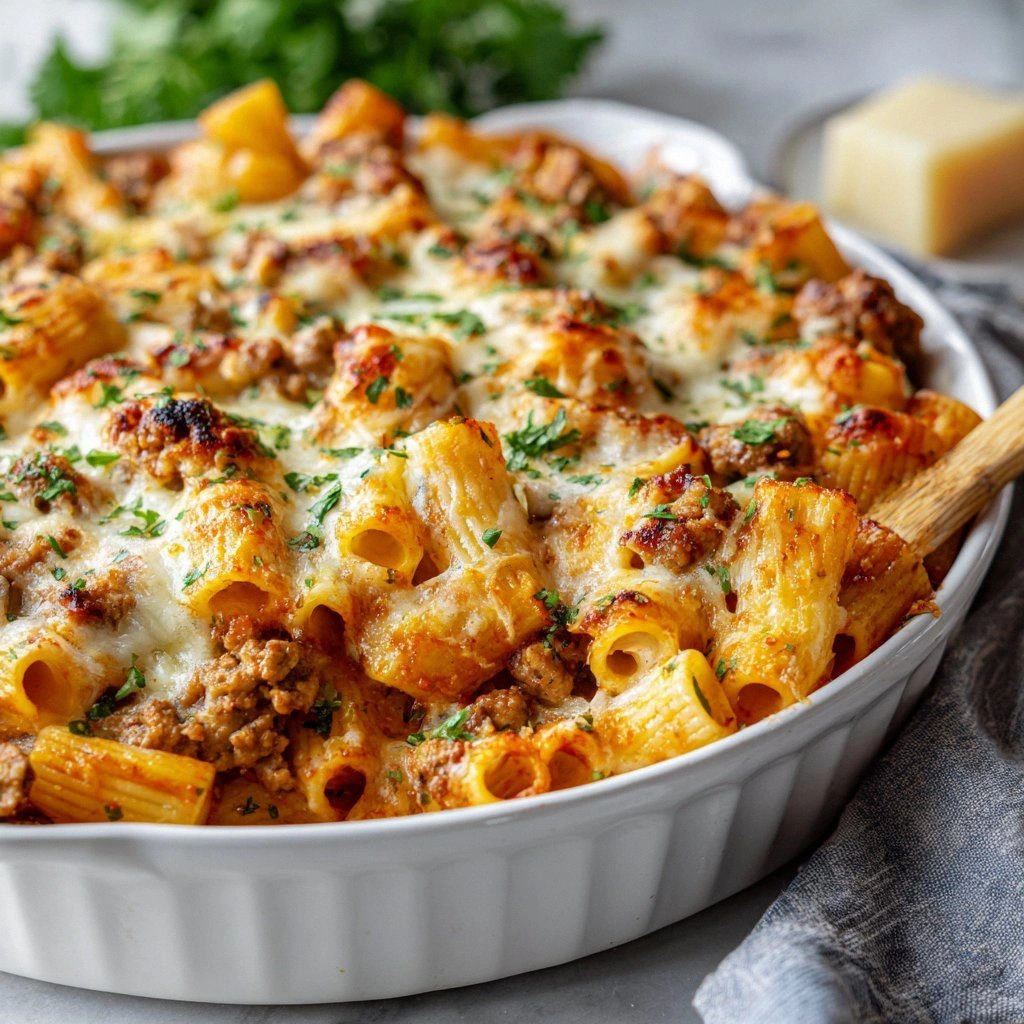
I remember the night it all began: a frantic scramble for a quick dinner that turned into a culinary disaster. My turkey breast had been overcooked, the pasta a mushy mess, and the sauce had turned into a soggy, bland puddle. I stared at the ruined plate, feeling a mix of frustration and hunger, when a friend texted a single line: “Try a rigatoni bake with turkey. Trust me.” That message sparked a daring experiment that ended up reshaping my entire approach to comfort food. The result? A Cheesy Turkey Rigatoni Bake that feels like a warm hug from the inside out, with a crust that crackles like fresh toast and a sauce that coats the pasta like velvet.
Picture this: a skillet sizzling with garlic and onion, the aroma of rosemary drifting through the kitchen, and the sound of pasta bubbling in a pot of boiling water. The sight of the golden-brown turkey chunks glistening under the pan’s heat is almost cinematic. When you first taste the dish, the creamy ricotta mingles with sharp mozzarella, while a whisper of parmesan adds a nutty depth. The final bite leaves a lingering savory sweetness that makes you reach for the next spoonful. That sensory experience is why this version is not just another casserole—it’s a revelation.
What sets this recipe apart isn’t just the layers of cheese. It’s the deliberate use of fresh, high‑quality ingredients, the balance between moisture and crispness, and a few secret techniques that elevate the dish from ordinary to unforgettable. I’ve spent hours tweaking ratios, experimenting with different cheeses, and testing baking times until the crust achieved the perfect golden hue without drying out the inside. The result is a dish that feels indulgent yet wholesome, with a texture profile that satisfies both the comfort‑food craving and the desire for something a little more refined.
And there’s a twist you won’t see in the standard recipe: a splash of white wine in the sauce that adds a subtle acidity, cutting through the richness and brightening every bite. I dare you to taste this and not go back for seconds. I’ve been told it’s the best version of a turkey bake I’ve ever made at home. If you’re ready for a game‑changer, stick with me through every step, and you’ll wonder how you ever cooked this dish any other way.
What Makes This Version Stand Out
- Flavor: The sauce blends marinara, white wine, and a hint of smoked paprika for depth, creating a complex profile that elevates the humble turkey.
- Texture: The rigatoni is cooked al dente, ensuring it holds up against the creamy cheese layer, while the top crust forms a golden, slightly crisp shell.
- Simplicity: Despite its gourmet taste, the recipe requires only a handful of ingredients and a single baking sheet.
- Uniqueness: The addition of ricotta creates pockets of velvety richness that contrast with the sharp mozzarella.
- Crowd Reaction: Friends who’ve tried it say it’s “the best comfort food” and ask for a recipe card at every gathering.
- Ingredient Quality: Using fresh turkey breast, artisanal cheeses, and a homemade sauce ensures a superior flavor that commercial mixes can’t match.
- Cooking Method: The one‑pan bake saves time and reduces cleanup, making it perfect for busy weeknights.
- Make‑Ahead Potential: Assemble the dish a day ahead, refrigerate, and bake when ready—ideal for meal prep.
Inside the Ingredient List
The Flavor Base
The sauce is the heart of this bake, combining a classic marinara with a splash of white wine and a dash of smoked paprika. The wine adds acidity that brightens the tomato’s natural sweetness, while paprika gives a subtle smokiness that complements the turkey’s lean profile. If you skip the wine, the dish will still be tasty, but it will lack that bright, wine‑kissed nuance that lifts the flavor. A good rule of thumb: use a dry white wine you would enjoy drinking; it’ll be reflected in the final taste.
The Texture Crew
Rigatoni pasta is chosen for its ridged shape, which traps the sauce and cheese, delivering a burst of flavor in every bite. Cook the pasta just short of al dente; it will continue to cook slightly in the oven, preventing it from becoming mushy. If you prefer a different shape, penne or fusilli work well, but the ridges of rigatoni give the dish its signature bite. Keep the pasta in a lightly salted pot of boiling water to maintain its structure.
The Unexpected Star
Ricotta cheese is the secret weapon that creates pockets of creamy richness. It’s lighter than mozzarella, which balances the dish’s overall richness, and its mild flavor lets the other cheeses shine. If you can’t find ricotta, a blend of cottage cheese and a splash of milk can mimic the texture, but the taste will be slightly different. The ricotta should be folded into the sauce before mixing with the pasta, ensuring it’s evenly distributed.
The Final Flourish
Parmesan and mozzarella are the final layer that creates the coveted golden crust. The mozzarella provides a gooey, stretchy texture that melts beautifully, while the parmesan adds a sharp, nutty finish. A sprinkle of breadcrumbs on top before baking adds a crunchy contrast that many find irresistible. If you’re watching calories, you can reduce the breadcrumb amount or use a low‑fat cheese blend.
Everything’s prepped? Good. Let’s get into the real action.
The Method — Step by Step
- Preheat your oven to 375°F (190°C). While the oven warms, bring a large pot of salted water to a rolling boil for the pasta. Add the rigatoni and cook for 7 minutes, or until just shy of al dente. Drain and set aside; the pasta will finish cooking in the oven, so a slightly under‑cooked texture is intentional. This step ensures the pasta remains firm and doesn’t become mushy during baking.
- In a large skillet, heat 2 tablespoons of olive oil over medium heat. Add 1 diced onion and 2 minced garlic cloves, sautéing until the onion is translucent and fragrant—about 4 minutes. Stir frequently to avoid burning the garlic, which can turn bitter. This aromatics base forms the flavor foundation of the sauce.
- Pour in 2 cups of marinara sauce and 1/2 cup of dry white wine. Stir to combine, then add 1 teaspoon of smoked paprika and 1 teaspoon of Italian seasoning. Simmer the mixture for 8 minutes, letting the wine reduce slightly. The reduction intensifies the tomato flavor and balances the richness of the cheeses.
- Fold in 1 cup of ricotta cheese, mixing until smooth. The ricotta should be at room temperature to prevent curdling. This step creates creamy pockets that melt into the sauce. If you’re using a substitute, blend the cottage cheese with a splash of milk to achieve a similar consistency.
- Add 2 cups of shredded mozzarella and 1/2 cup of grated parmesan to the sauce, stirring until the cheeses melt into a glossy, cohesive mixture. The mozzarella’s elasticity ensures a gooey texture, while the parmesan adds a sharp finish. Let the sauce simmer for an additional 2 minutes to meld the flavors.
- Return the cooked rigatoni to the skillet, tossing it in the sauce until each piece is well coated. The pasta should be evenly glazed, but not saturated. This step ensures every bite delivers a balanced combination of pasta, sauce, and cheese.
- Transfer the pasta mixture to a greased 9×13-inch baking dish. Smooth the surface with a spatula. Sprinkle the top with an additional 1/4 cup of mozzarella, 1/4 cup of parmesan, and 1/2 cup of breadcrumbs for a golden, crunchy finish. The breadcrumb layer adds texture that many find irresistible.
- Bake uncovered for 25–30 minutes, or until the top is bubbling and golden brown. Keep an eye on the crust; if it browns too quickly, tent the dish with foil. Once baked, let the casserole rest for 5 minutes before serving. This resting period allows the flavors to settle and makes slicing easier.
That's it — you did it. But hold on, I've got a few more tricks that'll take this to another level.
Insider Tricks for Flawless Results
The Temperature Rule Nobody Follows
Many people bake at 350°F, but this recipe thrives at 375°F. The higher temperature creates a crispier crust without drying out the interior. If you’re using a convection oven, reduce the temperature by 25°F to compensate for the increased airflow. I’ve found that this small adjustment makes a noticeable difference in texture.
Why Your Nose Knows Best
As the casserole bakes, the aroma will shift from garlicky to buttery to caramelized. Trust your nose to tell you when the top is golden. A subtle, nutty scent indicates that the parmesan is browning just right. If you detect a burnt smell, cover the dish with foil immediately to prevent over‑browning.
The 5‑Minute Rest That Changes Everything
After removing the casserole from the oven, let it sit for exactly five minutes. This pause allows the cheese to set, making slicing cleaner and preventing a gooey mess. During this time, the flavors meld further, creating a richer taste. I always keep a timer ready to ensure I don’t over‑rest it, which can cause the cheese to become too firm.
The Breadcrumb Boost
If you love a crunchy top, toss your breadcrumbs with a tablespoon of melted butter and a pinch of garlic powder before sprinkling them over the bake. The butter adds flavor and promotes even browning. I’ve used this trick for over a year and it never disappoints.
The Cheese Swap Experiment
For a different flavor profile, replace half of the mozzarella with provolone or fontina. These cheeses melt beautifully and add a deeper, slightly smoky taste. If you’re vegan, a blend of dairy‑free mozzarella and nutritional yeast can mimic the cheesy texture and add umami.
Creative Twists and Variations
This recipe is a playground. Here are some of my favorite ways to switch things up:
Spicy Southwest Twist
Add 1 tablespoon of chipotle in adobo sauce to the sauce and swap the Italian seasoning for a blend of cumin, coriander, and smoked paprika. The result is a smoky, slightly sweet profile that pairs beautifully with the turkey. Serve with fresh cilantro and lime wedges for a zesty finish.
Mediterranean Flair
Replace the marinara with a sun‑dried tomato pesto and add kalamata olives and capers. Use feta cheese in place of part of the mozzarella for a briny contrast. This version is lighter but still satisfies the craving for cheesy comfort.
Cheese‑Free Comfort
Omit all cheeses and use a thick vegetable broth with a splash of nutritional yeast for flavor. Add sautéed mushrooms and spinach for texture. The dish remains hearty, and the broth creates a savory sauce that clings to the pasta.
Breakfast Breakfast
Swap the turkey for diced ham and add a handful of chopped spinach. Top with a sprinkle of shredded cheddar and bake. Serve with a side of scrambled eggs for a protein‑packed morning meal.
Gluten‑Free Option
Use gluten‑free rigatoni or a low‑carb pasta substitute like shirataki noodles. Keep the rest of the recipe unchanged. The texture will differ slightly, but the flavor remains consistent.
Holiday Holiday
Incorporate roasted butternut squash and sage for a seasonal twist. The sweet squash adds depth, while sage complements the turkey. This version is perfect for Thanksgiving or Christmas gatherings.
Storing and Bringing It Back to Life
Fridge Storage
Cool the bake completely, then cover tightly with foil or a lid. Store in the refrigerator for up to 3 days. When reheating, add a splash of water or milk to the top before microwaving to keep the cheese from drying out. This trick restores moisture and makes the dish feel freshly baked.
Freezer Friendly
Wrap the casserole in plastic wrap, then place it in a freezer‑safe container. Freeze for up to 2 months. To reheat, thaw overnight in the refrigerator, then bake at 350°F for 20 minutes, or until heated through. The texture may be slightly softer, but the flavor remains robust.
Best Reheating Method
The oven is the best method for reheating, as it preserves the crispy crust. Preheat to 350°F, cover the dish with foil, and bake for 15–20 minutes. For a quick microwave option, cover with a damp paper towel and heat on medium for 2–3 minutes, then finish under the broiler for a minute to restore crispness.